
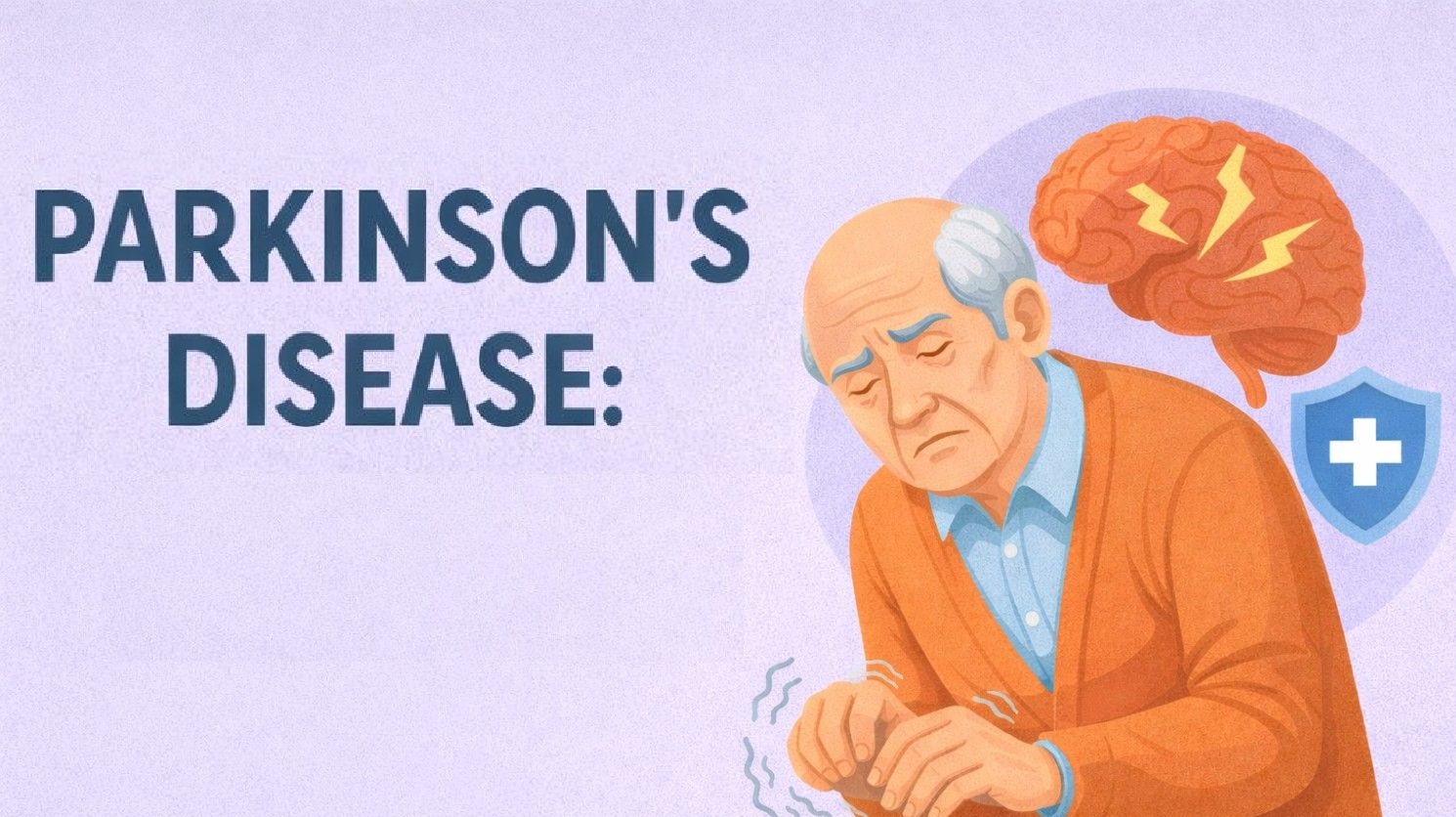
If you’re searching for a clear answer to what Parkinson’s disease is? and how it impacts everyday life, here it is straight away: Parkinson’s disease is a long-term brain condition that slowly affects movement, emotions, memory, and overall well being. While there is no permanent cure yet, the right medical care, strong focus on Mental Health & Daily Care, and smart food choices can help people live better and more comfortably for years.
Parkinson’s Common Symptoms
Parkinson’s disease mainly affects specific brain cells that control movement. Over time, these cells stop working as they should, leading to visible physical changes. These changes don’t happen overnight. Instead, they develop slowly and become more noticeable as time passes.
One of the earliest and most well-known signs is shaking, often called tremors. These usually start in the hands but can also affect the legs, jaw, or other parts of the body. Muscle stiffness is another common symptom, making movements feel tight or painful. Many people also notice that their movements become slower, which can turn simple tasks into tiring efforts.
Balance and coordination can also suffer. Walking may feel unsteady, and turning or standing up can become harder. As symptoms progress, speaking clearly, writing neatly, or even maintaining posture may become challenging. This is where regular medical check-ups and a strong focus on Mental Health & Daily Care become extremely important.
It’s also important to remember that Parkinson’s does not affect everyone the same way. Some people experience mild symptoms for many years, while others may see faster changes. Early diagnosis, combined with proper treatment, can help manage symptoms more effectively and improve daily life.
Parkinson’s and Mental Health: Why It Matters More Than You Think
Parkinson’s disease doesn’t just affect the body, it deeply impacts the mind as well. Studies show that nearly 40 to 50 percent of people with Parkinson’s experience depression at some stage. Anxiety, mood swings, sleep problems, and feelings of loneliness are also very common.
These mental health challenges are not caused by personal weakness. They happen because Parkinson’s affects brain chemistry. That’s why Mental Health & Daily Care should never be ignored. Emotional well-being is just as important as physical treatment.
Talking openly with doctors, therapists, or counselors can help manage these feelings. Support groups, where people share similar experiences, can also reduce isolation. Family members and caregivers play a huge role too. Simple acts like listening, offering patience, and encouraging independence can make daily life easier and more meaningful.
What to Eat and What to Avoid
Food may not cure Parkinson’s disease, but it can strongly support overall health. Research from Harvard has shown that people who eat more plant-based foods—such as fruits, vegetables, whole grains, and beans have a lower risk of developing Parkinson’s. These foods are packed with fiber, vitamins, and antioxidants that support brain and body health.
A diet rich in colorful vegetables and fresh fruits can help improve digestion and energy levels. Whole grains provide steady energy, while legumes offer plant-based protein without heavy fats. This approach fits well into a lifestyle focused on Mental Health & Daily Care, as better nutrition often leads to better mood and energy.
On the other hand, some foods are best limited. Items high in saturated fats, heavily processed snacks, sugary foods, and excessive protein can sometimes worsen symptoms or interfere with medications. Drinking too much alcohol is also discouraged. Making mindful food choices can help support daily comfort and long-term well-being.
Memory and Concentration Changes
As Parkinson’s progresses, it may also affect memory and thinking abilities. Some people notice forgetfulness, trouble concentrating, or difficulty finding the right words during conversations. These changes usually appear in later stages but can still impact work, relationships, and daily routines.
Simple daily habits can help manage these challenges. Keeping a fixed routine, using written reminders, setting phone alarms, and breaking tasks into smaller steps can make life easier. Staying mentally active—through reading, puzzles, or hobbies—can also help keep the brain engaged.
When memory or thinking issues start interfering with everyday life, it’s important to speak with a healthcare provider. Early support and adjustments can make a big difference, especially when combined with consistent Mental Health & Daily Care.
Nutritional Superfoods That May Help
Certain foods are often considered helpful additions to a Parkinson’s-friendly diet. Nuts like walnuts, almonds, and cashews make good snacks when eaten in small amounts. They contain healthy fats and nutrients that support overall wellness.
Ceylon cinnamon is another food that often gets attention for its potential benefits. While these foods are not treatments or cures, they can be part of a balanced diet that supports daily health. Moderation is important, and any major dietary change should always be discussed with a doctor.
Adding these foods thoughtfully can support both physical strength and emotional balance, reinforcing the importance of Mental Health & Daily Care in daily routines.
The Big Picture: Living Better Every Day
Parkinson’s disease affects much more than movement. It touches emotions, memory, confidence, and daily habits. That’s why a balanced approach works best. Medical treatment, emotional support, healthy eating, and strong Mental Health & Daily Care together can greatly improve quality of life.
Living with Parkinson’s is not easy, but it doesn’t mean life stops. With awareness, early care, and small daily efforts, people can continue to enjoy meaningful activities, relationships, and independence. Every positive step, no matter how small adds up over time.
By focusing on physical health, emotional well-being, and practical daily support, individuals and families can face Parkinson’s with strength, clarity, and hope.